Case study · 2026
Na Polanie: naming, building and launching a preschool's new room in just over three weeks
Name, brand, landing page, sign-up system and launch campaign for Na Polanie, a new room at Dmuchawiec Montessori in Grodzisk Mazowiecki: from a [NAME] placeholder in the brief to a live site and a running campaign.
- Client
- Education, Montessori preschool
- Status
- Live; campaign running since 15 October 2026
- Service
- Empes Studio
- Scope
- Naming and brand, landing page, sign-up system and admin panel, launch campaign, creatives and video
Visit the live site: napolanie.dmuchawiec-montessori.pl (opens in a new tab) napolanie.dmuchawiec-montessori.pl
Problem
Three things were missing at once, and all three had to be ready before the room opened:
- A name. Every client document said [NAME].
- A place to send people. The preschool’s main site is built with a page builder that could not carry the walk-through idea the room needed, and parents had nowhere to sign up online.
- A way to tell local parents. The new room’s offer sits between classes with a parent and full-time preschool, which is easy to misunderstand. The campaign’s goal was full groups, not awareness.
Approach
- Offer a name, then let the client choose. Our working name was Nasionko, the seed that flies from a dandelion (the preschool’s own symbol) and grows into the room’s tree. The director then proposed Na Polanie (“in the clearing”) with the line “Miejsce, w którym dobrze rosną relacje”. Rather than argue for ours, we built both versions side by side, with a comparison, and she chose Na Polanie. The seed stayed, as the brand’s mark.
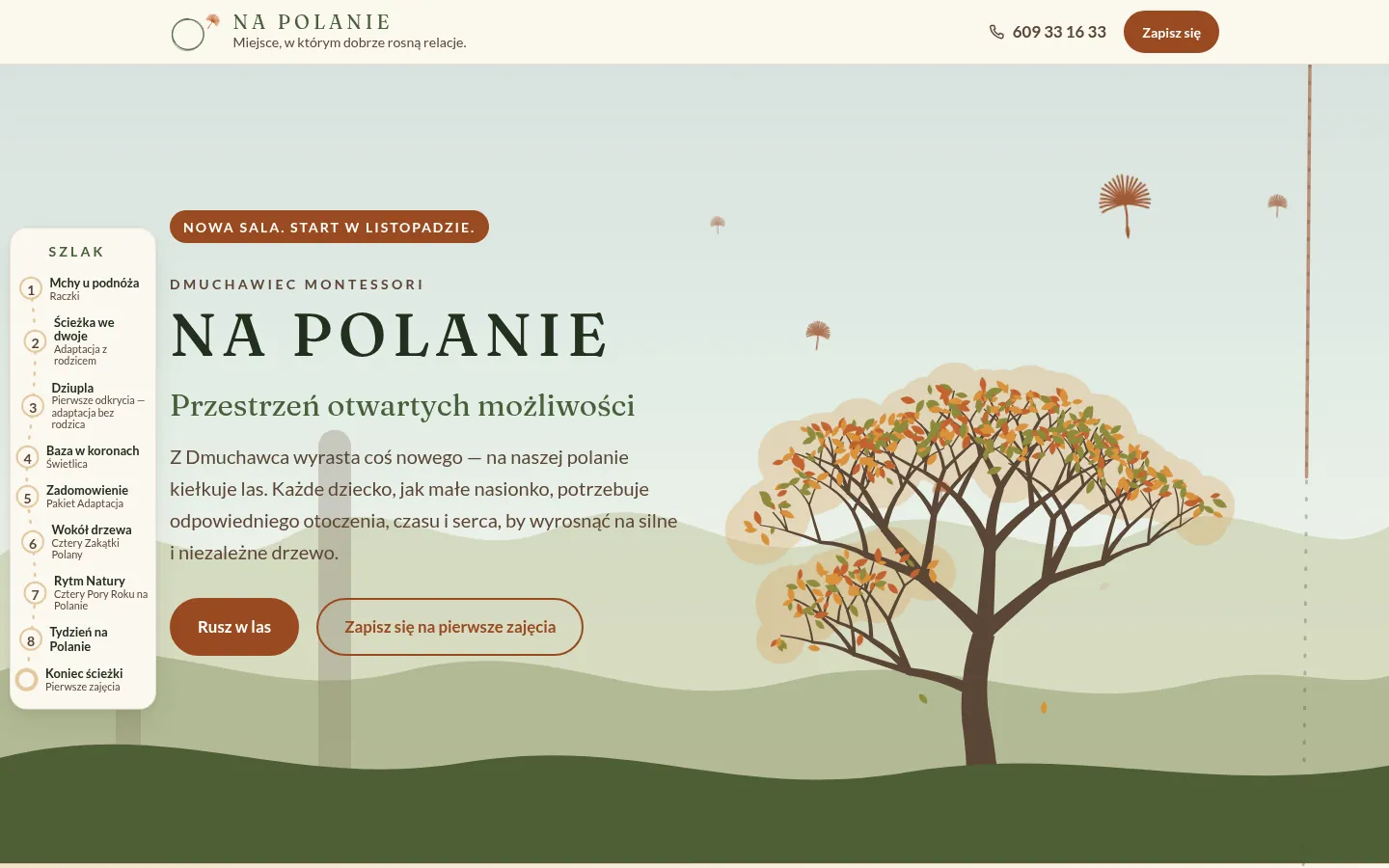
- Make the page a walk. The landing page is a trail through the forest, with numbered stops for each offer, so a parent reads it in the order they would decide: who it is for, how adaptation works, what a week looks like, and how to sign up.
- Sell calm, not urgency. Short sentences in the director’s voice, one call to action per post, no exclamation marks and no “sign up today”. Other preschools are never criticised.
- Plan for what can be measured. Every link carries campaign tags, and the sign-up panel is where results are counted.
Read the diagram as text
- What people see: landing page, 30 images, 8 short videos, posters and billboard designs
- Words and dates: one content file for the site, one for the creatives, one schedule
- Brand: one token file: colours, type, contrast measured for each colour
- Mark: the seed, generated from geometry and checked down to favicon size
Implementation
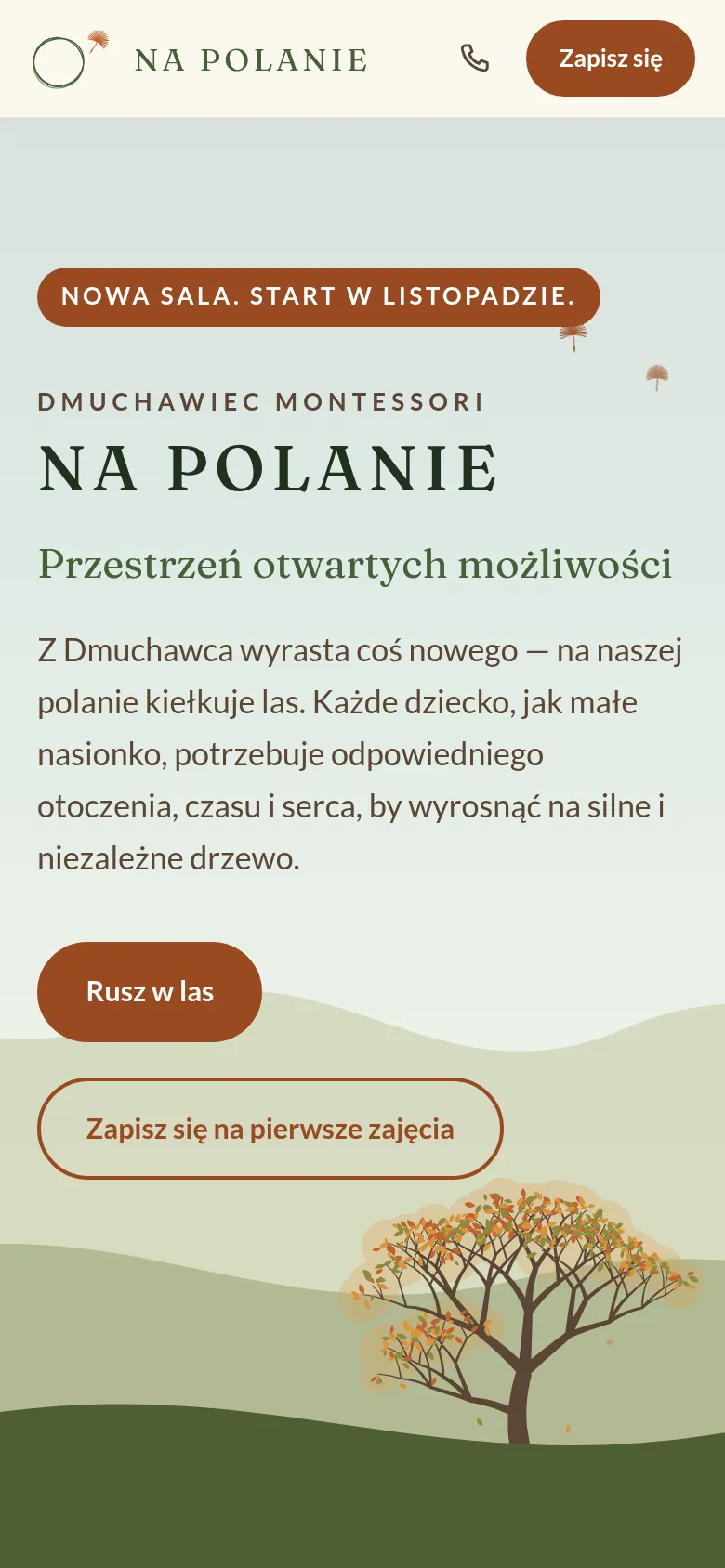
Brand. A name lockup in spaced capitals under “Dmuchawiec Montessori”, a seed mark generated from geometry rather than drawn by hand and checked down to favicon size, a palette whose wood tones come from the room’s design visualisation, with a measured contrast ratio written next to every colour, Fraunces and Lato self-hosted, and flat, warm illustrations.
Landing page. A static Astro site on its own subdomain. A side trail shows eight numbered stops and an end point, and fills as you scroll, with a seed travelling along it. The hero tree changes with the season the visitor arrives in. Sections cover the offers, the four corners of the room, the seasons, the weekly timetable and sign-up. All copy, hours and prices sit in one file. Every build runs an automated check: accessibility with axe, the same content with reduced motion, screenshots at three widths, and a page-weight budget for phones.
Sign-up system. Sign-up follows four steps the parent sees in every email: request, place confirmed, payment, first class. This matches the director’s wish not to handle money on a child’s first day. The preschool confirms a place straight from the notification email, through a signed link that needs a button press, so mail scanners cannot trigger it by accident. Free places are shown live, and when a group is full the form becomes a waiting list on its own. Data stays on the preschool’s hosting, with a required consent box, a privacy policy and a delete button in the panel. A honeypot field, a minimum fill time, a rate limit and file checks keep spam out.
Read the diagram as text
- Campaign: Instagram, Facebook, Google, local groups, posters (tagged links)
- Landing page: the trail
- Step 1: Sign-up form (nothing to pay yet). Otherwise: Group full: the form becomes a waiting list
- Person: Director's inbox and panel
- Step 2: Place confirmed (one click from the email)
- Step 3: Payment (at least 12 hours before)
- Step 4: First class
Campaign. Written in the repository alongside the site, so copy, dates and links stay consistent.
- Channels. New Instagram and Facebook accounts for Na Polanie, Meta ads, a small Google search campaign, local print (A3 posters and flyers), the preschool’s Google Business listing, posts in local parents’ groups, and an email to current parents sent by the director.
- Creatives. 30 images: feed posts, stories, carousels, Facebook posts and cover, an Open Graph image, and billboard and citylight designs with tested QR codes. 8 vertical videos for reels and stories, rendered from HTML scenes with a silent track so music can be added in Instagram. No photographs and no prices, because the room was still being built.
- Schedule. Preparation on 14 and 15 October, the reveal from 15 October with a joint post and the parents’ email, proof and local groups in the week of 19 October, closing posts and a bonus from 26 October, a quiet All Saints’ weekend, and the first classes from 2 November.
- Re-planned when it mattered. On 14 October the plan changed with the client: own accounts instead of the preschool’s profile, no billboard, a 15 km radius instead of 5 km, and no teaser, because a brand-new account has nobody to tease. Because copy, dates and links were already kept in one place, the new plan was in the repository the same day.
- Measurement plan. Sign-ups from the form, counted in the panel, against a cost-per-sign-up target, the share of local traffic, and how many visitors reach the sign-up section at the end of the trail. A Meta pixel is built in, loads only after consent and only on the live site, and reports a lead only when a sign-up succeeds. It switches on when the client supplies the pixel ID.
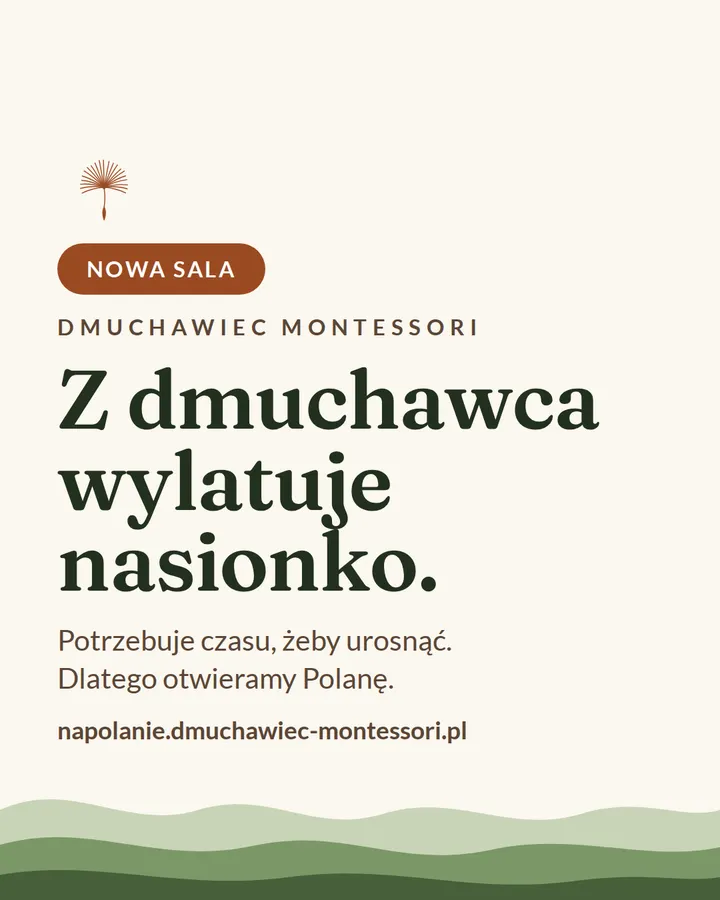 Feed post, 4:5
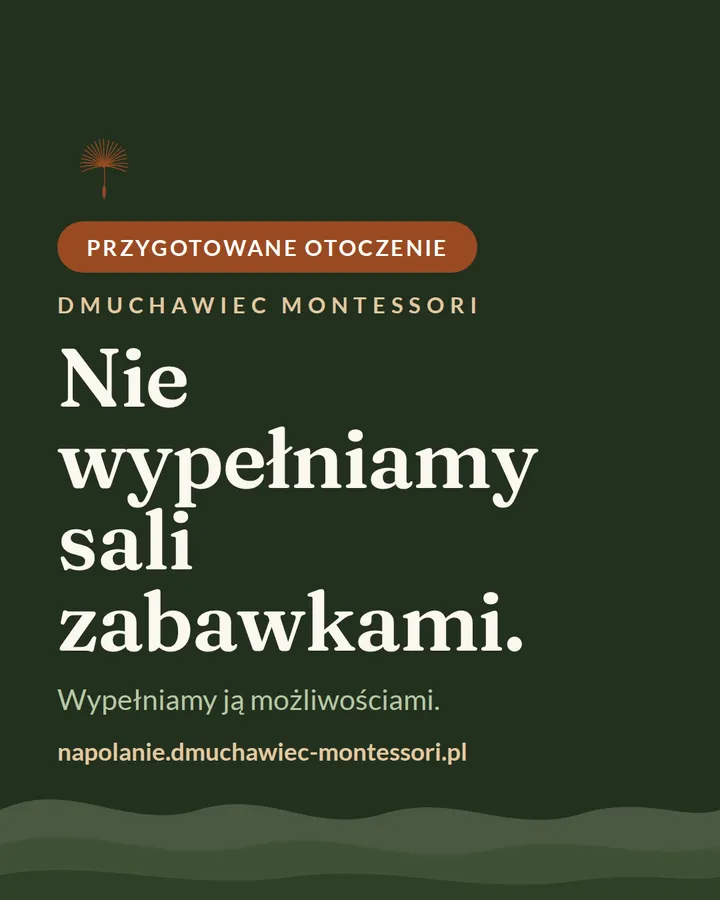 Feed post, 4:5
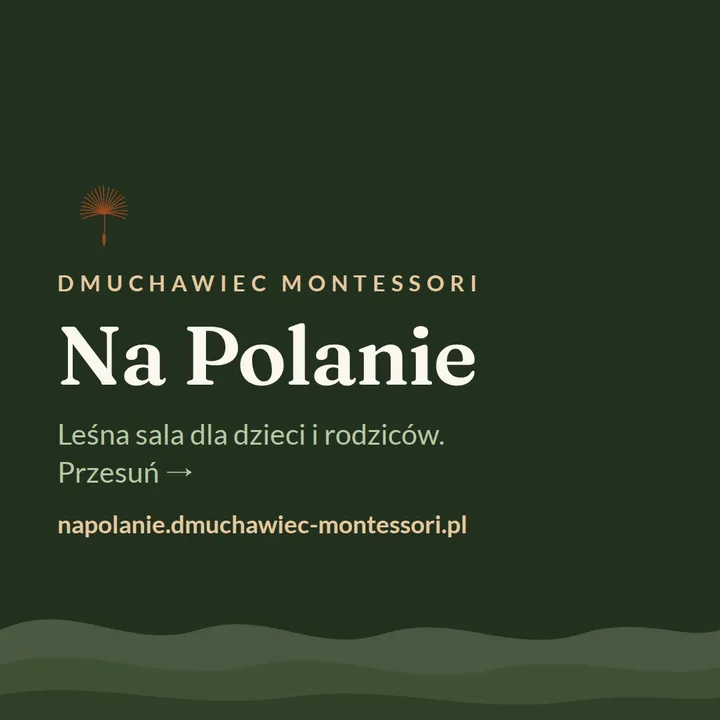 Carousel, 1:1
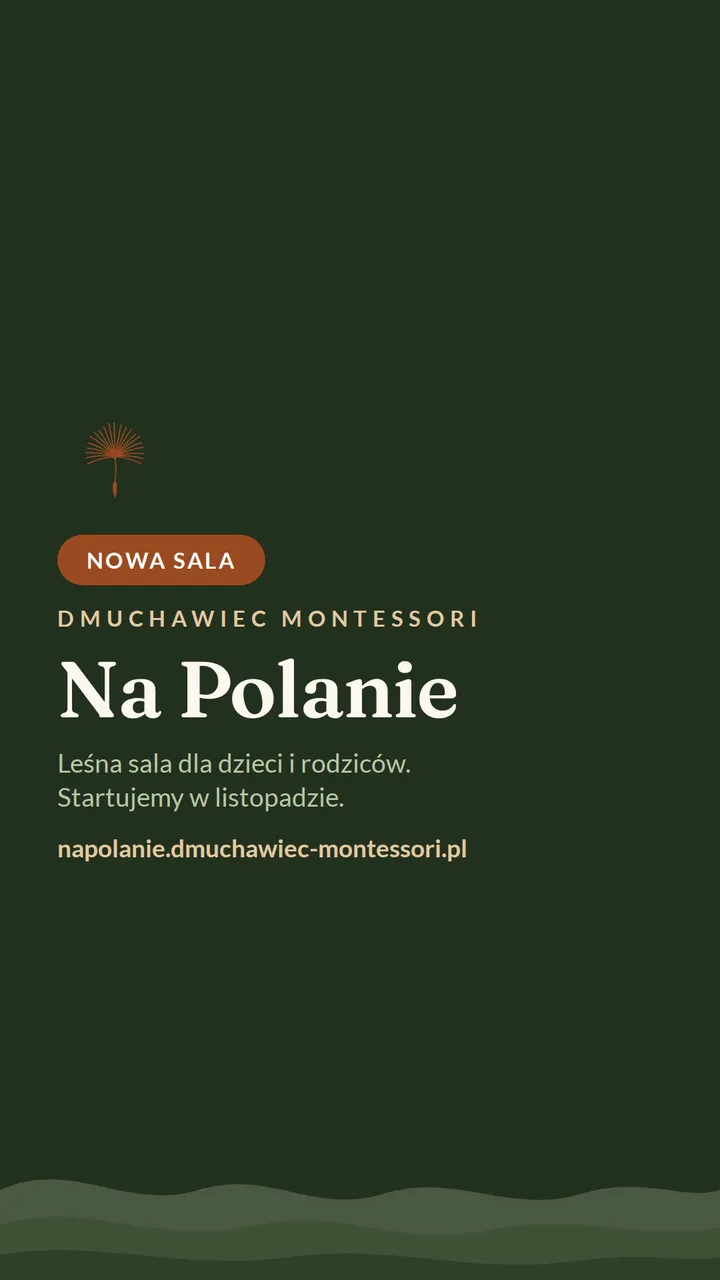 Story, 9:16
Read the diagram as text
- 22 Sep: Working name, campaign plan, first landing page
- 25 Sep: Client proposes Na Polanie; both names built
- 2 Oct: Na Polanie chosen; sign-up system
- 5 Oct: Landing page and sign-up live
- 10 Oct: Reels and creatives
- 14 Oct: Campaign re-planned; pixel with consent
- 15 Oct: Campaign starts
- 2 Nov: First classes, as planned
Outcome
- Between the first commit on 22 September and 14 October 2026, the preschool went from a placeholder to a name, a brand, a live landing page with online sign-up, and a campaign ready to run.
- The landing page and the sign-up system have been live since 5 October 2026.
- The campaign started on 15 October 2026, with the creatives, copy, schedule and tracking prepared in advance.
- Results are not in yet. Sign-ups are counted in the preschool’s panel.
What this shows
A launch is one system, not three suppliers. When the name, the page, the sign-up flow and the campaign are designed together, a parent who taps an ad lands on the page that ad promised, signs up in a few steps, and the preschool sees that sign-up in its inbox. And when the plan changes a week before launch, there is one place to change it.
- Stack
- Astro, PHP, SQLite, Playwright, axe-core, GitHub Actions
- Type
- Strategy + implementation
- brand
- naming
- landing-page
- campaign
- meta-ads
- reels
- sign-up
- education
- montessori